1. Telecommunications and Next-Generation Networks: Pushing the Boundaries of Speed and Capacity
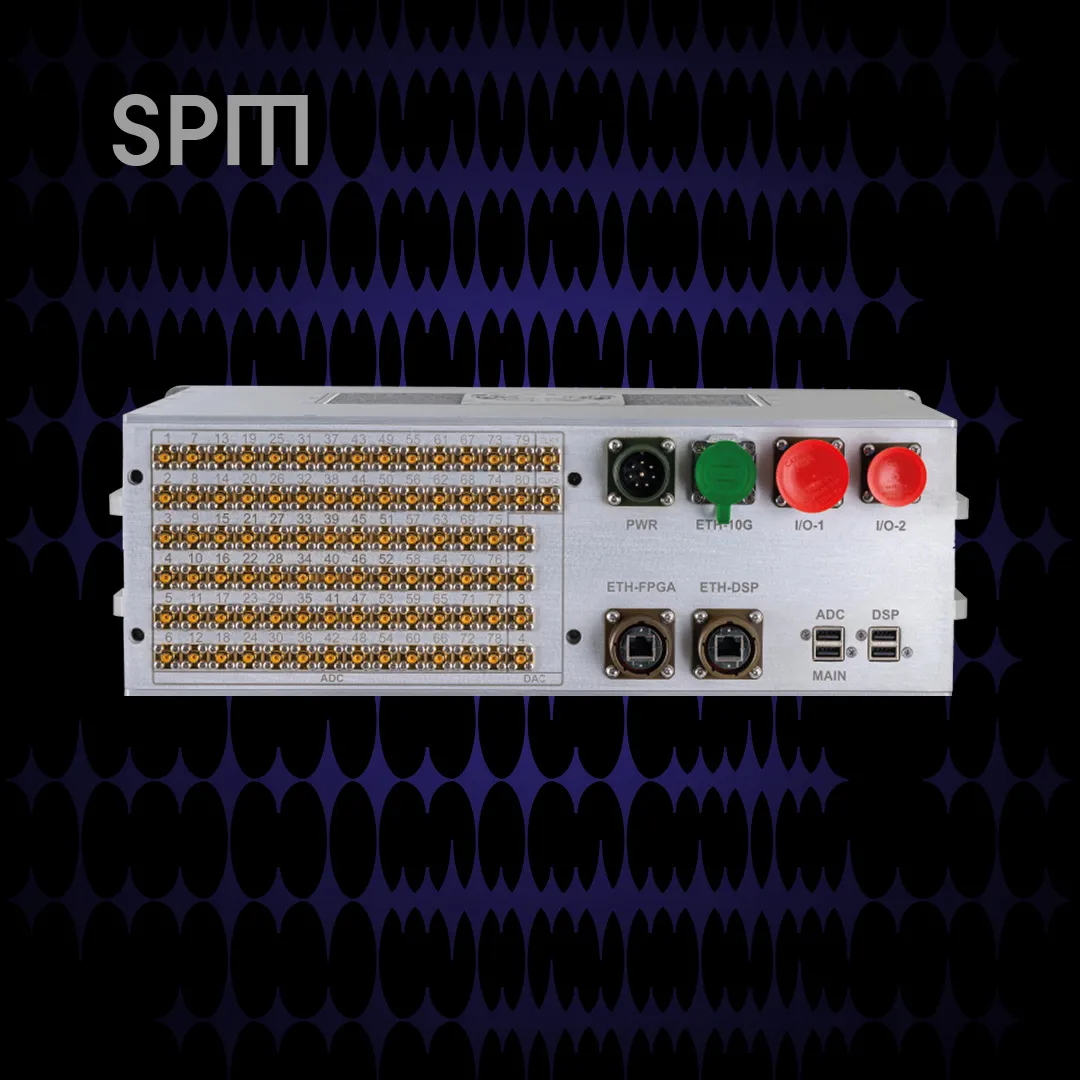
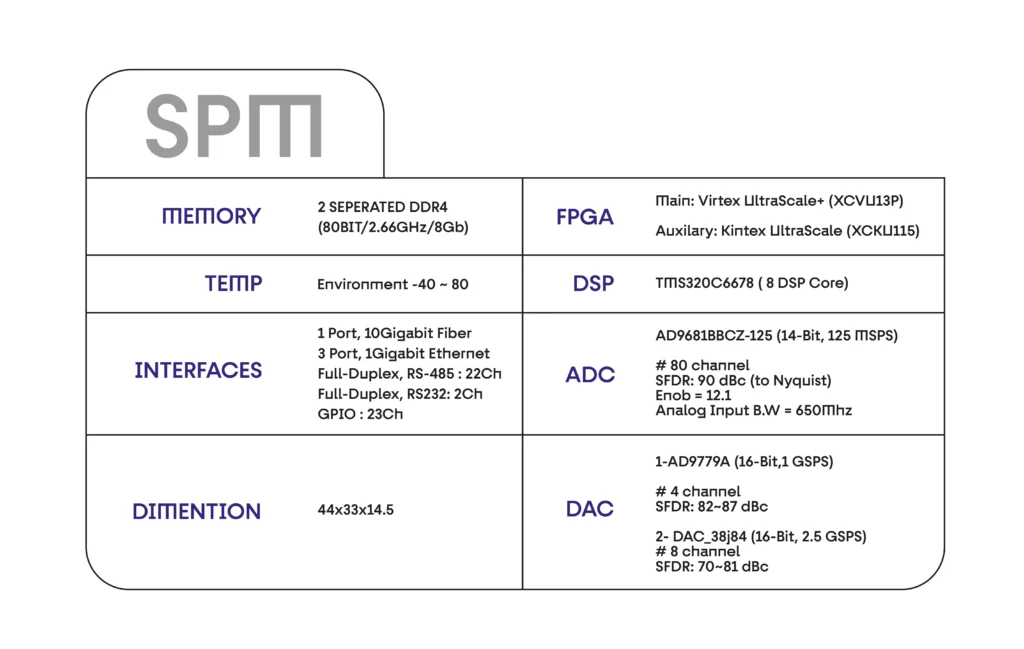
Modern communication systems demand ultra-high speed and real-time processing. The integrated FPGA and DSP architecture of the SPM platform empowers you to execute the most demanding signal processing and network analytics workloads with near-zero latency.
Applications:
Packet Processing
Network Analytics & Traffic Monitoring
Fiber Optic Communication Systems
Edge Telecom Computing
Why SPM?
In today’s high-capacity communication networks, including 5G and large-scale fiber optic infrastructures, high-speed data transmission alone is no longer sufficient. The real challenge lies in analyzing massive data streams simultaneously at the network edge. The SPM module is purpose-built to address this critical requirement. Data entering through high-speed 1GbE and 10GbE interfaces is streamed directly into the processing pipeline without encountering memory bottlenecks or software-induced latency. Acting as a powerful edge computing engine, SPM enables real-time traffic monitoring, anomaly detection, and intelligent decision-making, ensuring the performance, resilience, and reliability of next-generation communication networks.
2. Medical Imaging and Healthcare Equipment: Precision and Speed That Save Lives
In modern healthcare, every pixel and every millisecond can have a direct impact on clinical outcomes. Advanced medical imaging systems generate enormous volumes of raw data that must be transformed into diagnostically accurate images with exceptional precision and minimal latency.
Applications:
Real-Time 3D Image Reconstruction
Advanced Medical Image Processing (MRI, CT, Ultrasound)
High-Speed Diagnostic Equipment
Biomedical Data Analysis and Vital Signs Monitoring
Why SPM?
Diagnostic accuracy depends directly on the speed, reliability, and responsiveness of the underlying processing platform. SPM enables the real-time acquisition and processing of massive medical imaging data streams, ensuring that computationally intensive tasks—including image reconstruction, noise reduction, and tissue feature extraction—are executed with virtually no latency. By eliminating reliance on slower general-purpose processors, SPM serves as the computational core of advanced medical systems, enabling real-time imaging during surgical procedures, accelerated clinical workflows, and highly reliable automated diagnostic analysis.
3. Smart Energy Systems: Real-Time Grid Stability
Modern energy networks require far more than conventional monitoring to maintain efficiency, resilience, and operational stability. They demand real-time analytics and instantaneous responses to dynamic changes across the power grid.
Applications:
Smart Grid Distribution Networks
Integrated Energy Management
Solar and Wind Power Plant Control
Power Quality Analysis
Why SPM?
Within critical energy infrastructure, the key challenge is transforming vast streams of sensor data into operational decisions within fractions of a second. Leveraging its hybrid FPGA and DSP architecture, the SPM platform continuously processes parallel data streams from transformers, inverters, and current and voltage sensors in real time. This enables grid management systems to detect fluctuations, power quality issues, and emerging faults before they escalate into critical failures, allowing immediate corrective action with virtually no latency. By bringing intelligent, real-time processing directly to the point of energy generation and distribution, SPM delivers exceptional reliability, improved grid stability, and enhanced operational efficiency for next-generation energy systems.
4. Scientific Research and Advanced Laboratories: Accelerating the Frontiers of Discovery
Breakthrough discoveries demand uncompromising computational power. As a high-performance processing engine, the SPM platform removes hardware bottlenecks, enabling the most demanding scientific simulations and laboratory analyses with exceptional speed and efficiency.
Applications:
High-Speed Multi-Channel Data Acquisition
Laboratory Data Processing and Experimental Physics
Scientific Simulations and Parallel Computing
AI Research Computing Infrastructure
Why SPM?
Modern research laboratories generate vast volumes of complex data from advanced sensors, precision measurement systems, and experimental platforms every day. Conventional computing systems often struggle to keep pace with these intensive workloads. Powered by its advanced FPGA and DSP architecture, SPM provides an ideal hardware-accelerated platform for executing sophisticated signal processing algorithms, large-scale parallel computations, and multidimensional data analysis in real time. By significantly reducing the cycle of data acquisition, processing, analysis, and validation, SPM delivers the computational foundation required to accelerate scientific research, shorten development timelines, and enable faster, more reliable breakthroughs.
5. Intelligent Transportation Systems: Decision-Making at Millisecond Scale
Intelligent roads and transportation networks require constant awareness and ultra-fast decision-making. Modern transportation systems rely on the real-time synchronization and analysis of multiple concurrent data streams to ensure safety, optimize traffic flow, and improve operational efficiency.
Applications:
Intelligent Traffic Management and Control
Road Video Analytics
Smart Railway Control Systems
Transportation Infrastructure Monitoring and Advanced Driver Assistance Systems (ADAS)
Why SPM?
Today’s transportation networks continuously generate massive volumes of data from surveillance cameras, radar systems, and roadside sensors. Critical events—such as traffic accidents, congestion, or traffic signal changes—must be detected and addressed within milliseconds. The SPM platform simultaneously processes these parallel sensor streams, transforming raw data into actionable control commands in real time. Deployed at the edge of intelligent urban infrastructure, SPM autonomously performs regional traffic optimization, congestion detection, incident identification, and route management without relying on centralized processing. The result is safer roads, smoother traffic flow, and smarter, more responsive cities.